
Design & Implementation
Laboratory-Supported Services
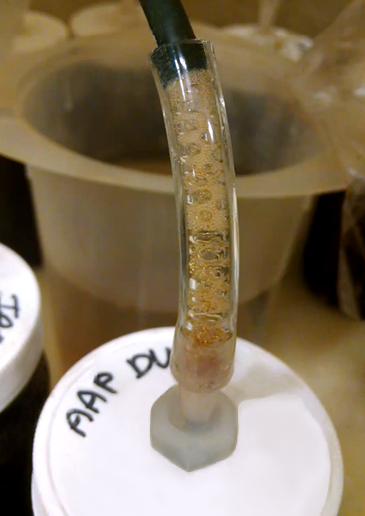
A key differentiator at Loureiro is the seamless integration of our on-site laboratory capabilities with the design and implementation phases of our engineering projects. This integration allows us to:
Evaluate technology performance under site-specific conditions
- Design integrated or hybrid strategies for complex sites, such as:
- In situ chemical oxidation (ISCO) coupled with enhanced bioremediation
- Targeted source treatment with plume management strategies
- Source excavation combined with monitored natural attenuation (MNA)
- Identify potential implementation risks
- Optimize treatment design before full-scale implementation
By combining laboratory results with our technical expertise, we help clients avoid costly underperforming systems and unforeseen design challenges.
From Inception to Completion
We provide the expertise needed for the design & implementation process from start to finish:
- Technology evaluation & selection
- Treatability & pilot testing
- Health & Safety planning
- Fabrication oversight
- Installation oversight
- Operations & performance monitoring
- Regulatory coordination
- Optimization recommendations
Our team of experienced engineers and scientists provides high-quality, technically sound environmental services that set us apart from competitors in the U.S. and internationally. We are committed to bringing this depth of expertise, innovation, and work ethic to every client and project. A selection of the remediation services we have implemented for our clients includes:
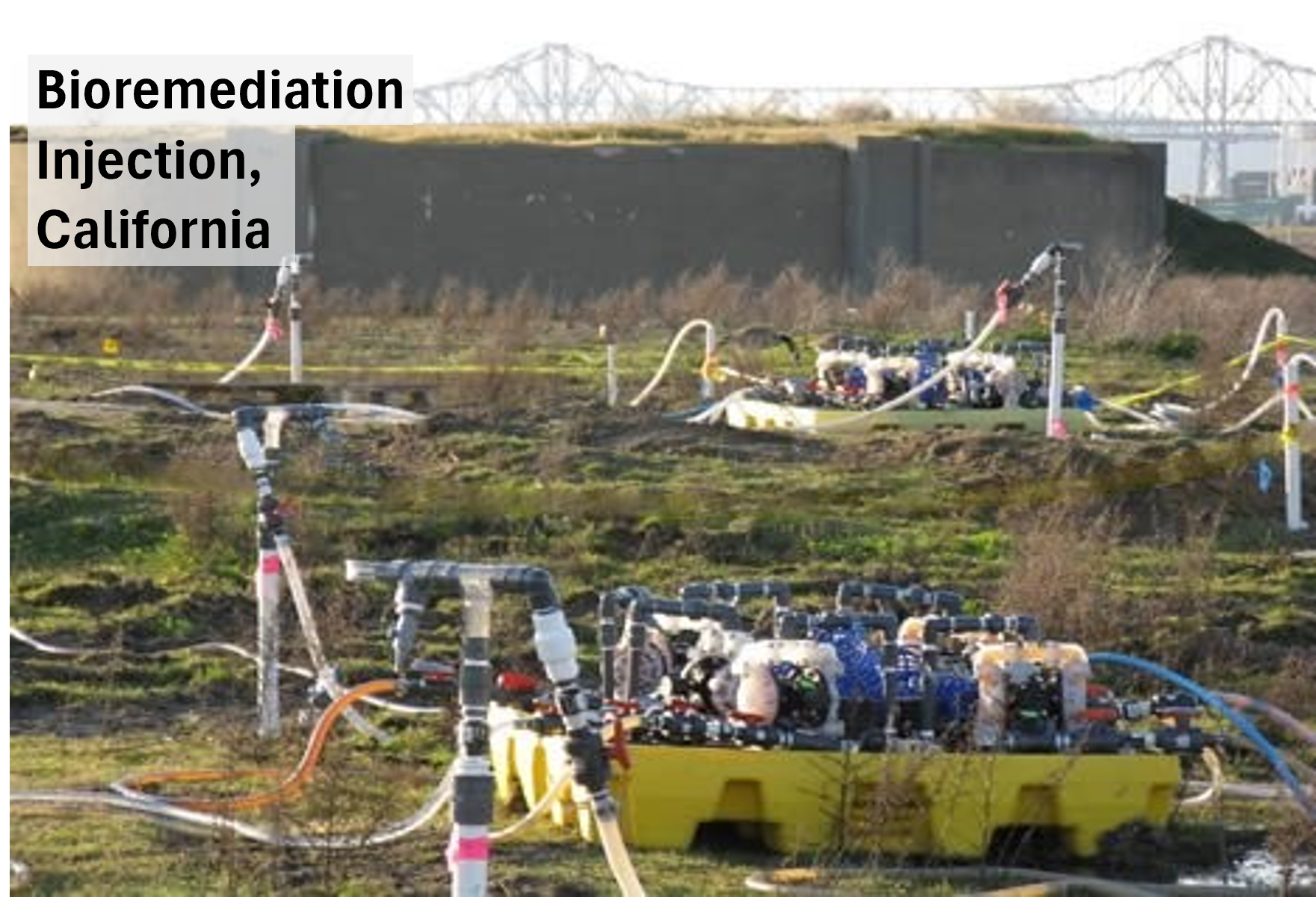
Loureiro provides a full suite of bioremediation services, including treatability testing, design and application strategies, and full-scale implementation. Each of these services can be used individually, but the best results are obtained when these services are used together as part of an integrative approach.
Design Services
Loureiro has completed designs for ISCO projects using several different application strategies, including direct injection, pull-push, and re-circulation. We scale up our treatability results to refine the design parameters for a field application of ISCO. Site-specific factors such as the contaminant(s), hydrogeology, and site logistics are taken into consideration when developing the most appropriate application approach.
For example, a less-experienced firm might conduct an ISCO injection event for a highly soluble contaminant (e.g., 1,4-dioxane) via direct injection. In this particular example, the injection fluid can often displace or “push” the contaminant, increasing the overall extent of the impacts. Loureiro will take factors such as the contaminant solubility into account and design an application that uses recirculation or pull-push strategies. While these ISCO applications can be more expensive than direct injection, they minimize application risks and end up being less expensive over the life cycle of the project.
Implementation
Loureiro has implemented ISCO at numerous sites with unique challenges including:
- Active/operational industrial facilities
- Sensitive and restricted areas at government facilities
- Busy commercial districts
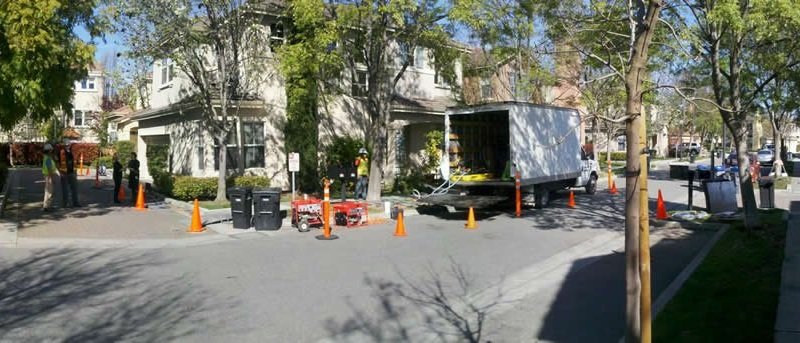
- Suburban neighborhoods requiring Loureiro to be off site before schools let out
- Indoor, active facilities
 Pre-Application Soil Cores

Post-Application Soil Cores
Loureiro was among the first companies to apply activated persulfate and stabilized hydrogen peroxide ISCO technologies. Loureiro has contributed to book chapters, assisted with guidance documents, and completed government funded field and treatability studies. Our engineers and scientists have experience in the following oxidant systems:
- Sodium persulfate, unactivated and activated
- Potassium persulfate (slow-release), unactivated and activated
- Potassium and sodium permanganate
- Hydrogen peroxide, with and without catalysts or stabilizers
- Ozone
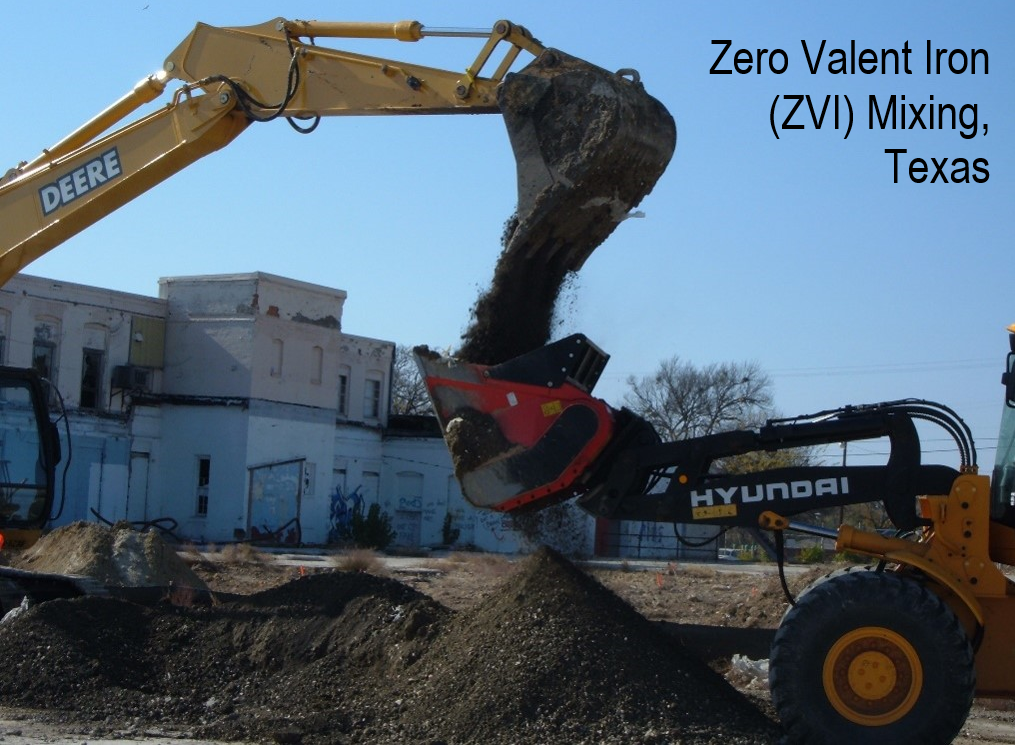
Loureiro has designed several projects using various different application strategies depending upon the site geology and project goals, including injection, trenching, or in situ mixing methods. Loureiro is renowned for our high quality implementation services with a stellar health and safety record. We have successfully implemented ISCR to treat both large and small sites with numerous site-specific challenges.
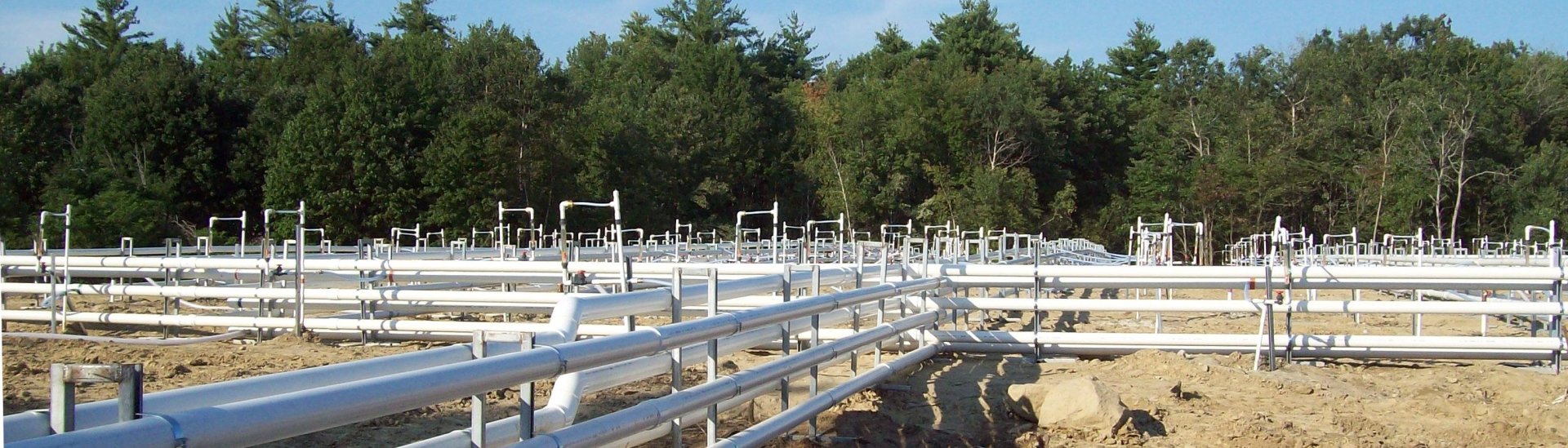
Loureiro has expertise in the evaluation, design, and implementation of air sparging and soil vapor extraction (AS and SVE), and thermally enhanced SVE (TSVE) technologies for a variety of contaminants of concern. Our experience includes the use of AS / SVE systems in conjunction with other technologies such as oxygen biosparging, bioventing, biostimulation, and aerobic trench systems. Loureiro provides AS / SVE services ranging from initial feasibility assessments to full-scale implementation:
- Determining the applicability of AS / SVE for your site conditions, including:
- Radius of influence investigations
- Modeling to determine vadose and saturated zone soil permeabilities
- Subsurface utilities and other potential short circuiting mechanisms
- Potential for reduced pore-volume flushing due to low permeability soils
- Setting realistic cleanup goals based upon sound science and engineering
- Estimating clean-up times
- Modeling the impact of an SVE remedy on future soil leaching criteria
- Providing credible representation to regulators and the public
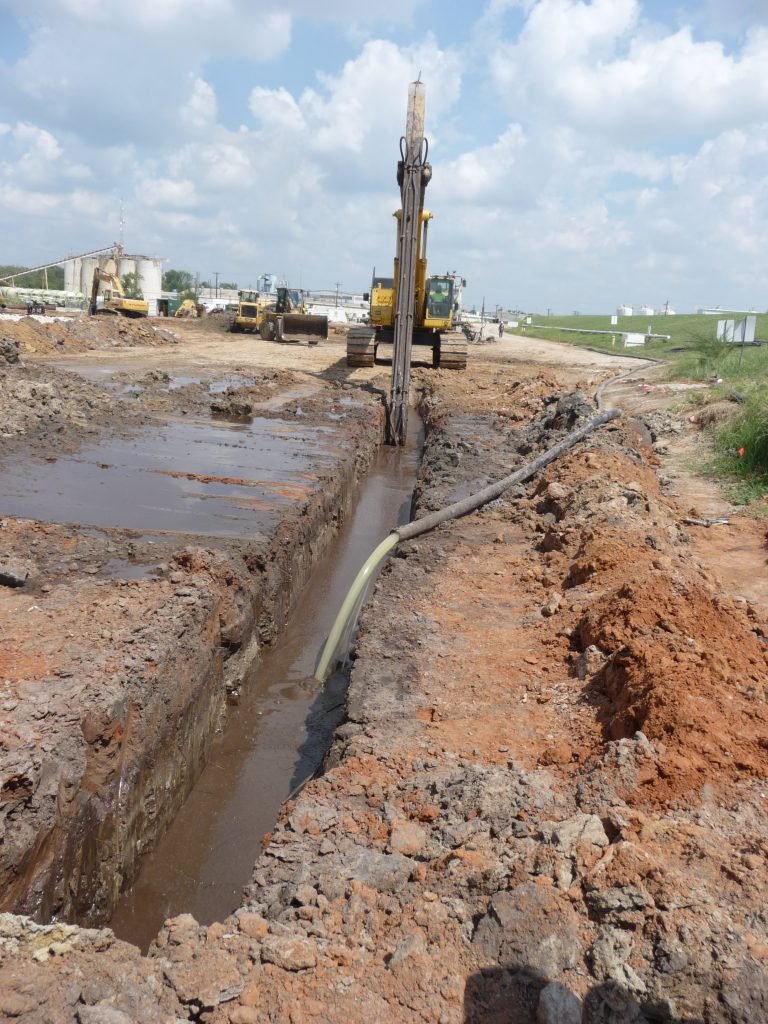
Sometimes groundwater extraction and treatment (i.e., pump and treat [P&T]) makes the most sense for sites where:
- Capital expenditures for other remedial technologies are significant relative to long-term operation and maintenance of an extraction system
- Subsurface conditions are not amenable to other technologies
- Sensitive receptors are located immediately downgradient of impacts
- Regulations require hydraulic capture
Loureiro has designed, installed, and operated several remedial systems involving hydraulic capture:
- Superfund level groundwater and fate and transport modeling
- Well, conveyance, and equipment design and installation oversight
- Value engineering and design calculations to meet discharge permitting requirements
- Operation, maintenance, and monitoring services
These remedial technologies are supported by our in-house treatability laboratory. Investing upfront in data-driven decision-making ultimately results in more predictable performance, optimized dosing strategies, and a more efficient path to site closure.


